
The best first trek is not the most famous one. It is the one that fits the month you can travel, the days you can spare, and how your body handles height and cold. Start with three questions and the choice usually narrows to a handful.
1. When can you go?
Season decides more than anything else. A trek that is gentle in October can be dangerous in July or February. Look at the month first: our month guides show what conditions are usually like, such as treks in October or treks in April. If your month is July or August, the rain-shadow regions are usually a better fit than the wet southern slopes.
2. How many days do you have?
Count travel days as well as trail days. A trek that walks for four days often needs six or more days in total once you add the journey to the trailhead and back. Short trips suit easy and easy-to-moderate routes, and the Find My Trek tool filters by total trip length so you do not plan a route that does not fit.
3. How do you handle altitude and cold?
For a first trek, most people do well on routes that stay below about 4,000 m, where days are shorter and the risk of altitude sickness is lower. Higher routes ask for more acclimatisation time. Read our altitude sickness guide before you pick anything above that.
Understand the difficulty label
Difficulty ratings are relative to other Himalayan treks, and each site uses its own scale. One large operator says most of its grades, other than the hardest, can be attempted by beginners who are fit enough. A label is only a starting point, so read what drives it: altitude gained each day, snow and ice, hours of walking, and how far you are from a road. Our page on how we rate difficulty explains our approach.
Give yourself time to get fit
A common preparation plan runs about eight weeks, building distance first and then speed, with strength work, stair climbing and rest days. Harder routes need longer lead time. If you have a health condition, talk to a doctor before a high-altitude trek.
Put it together
- Pick your month, then check the month guide for that month.
- Set your total trip length, travel days included.
- Choose an easy or easy-to-moderate route for a first trek, and a trek below about 4,000 m if you are unsure about altitude.
- Go with an operator that can explain its acclimatisation and evacuation plan.
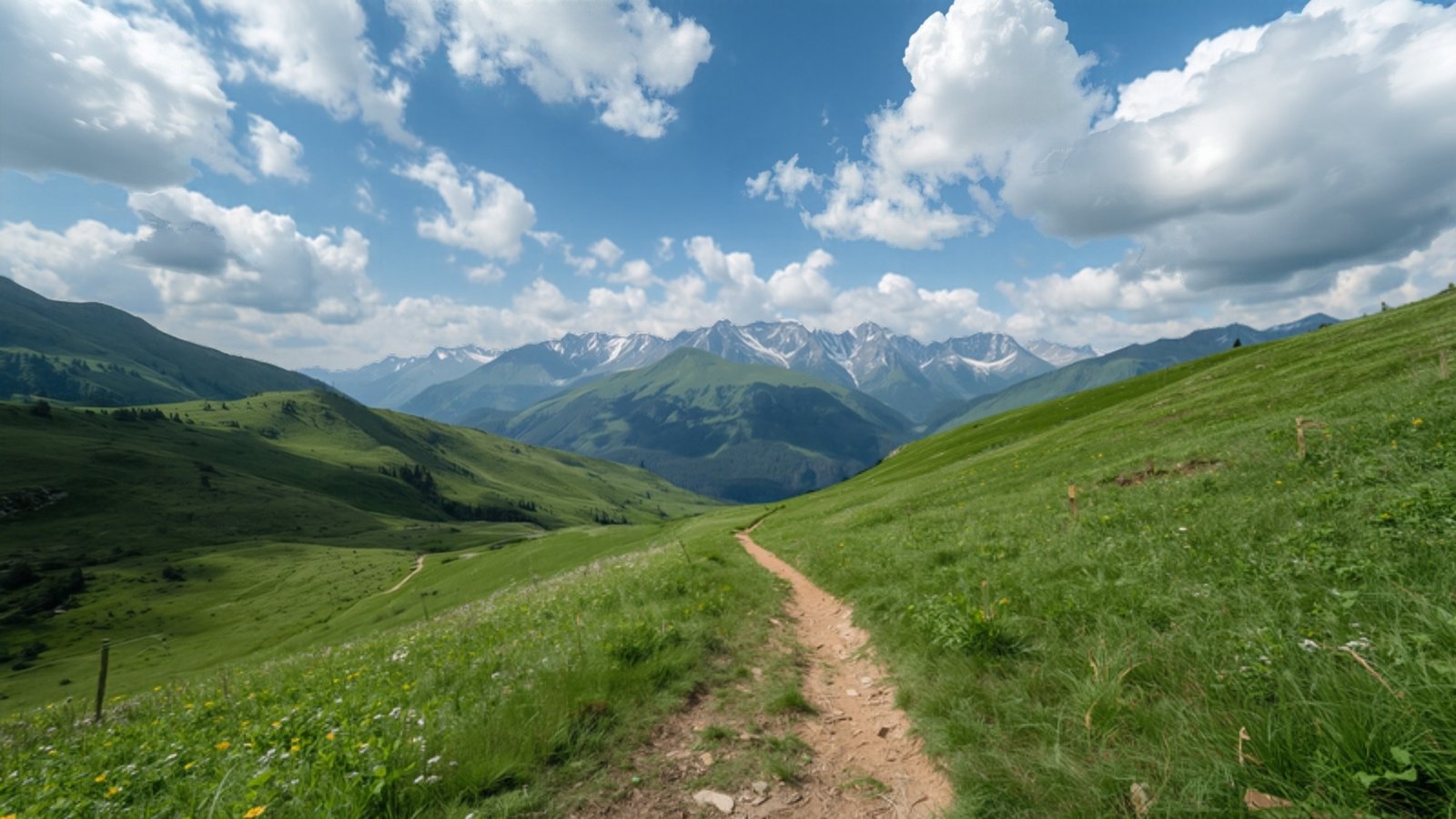
If you would rather let a tool do the narrowing, try Find My Trek. It only uses facts we have verified, and it tells you when something is missing. Conditions change from year to year and valley to valley. Confirm current conditions with your operator or the local forest or tourism office before you book. The featured image is an illustrative, AI-generated landscape and does not show a specific trail.